When Do Baby Teeth Fall Out? A Parent’s Timeline Guide
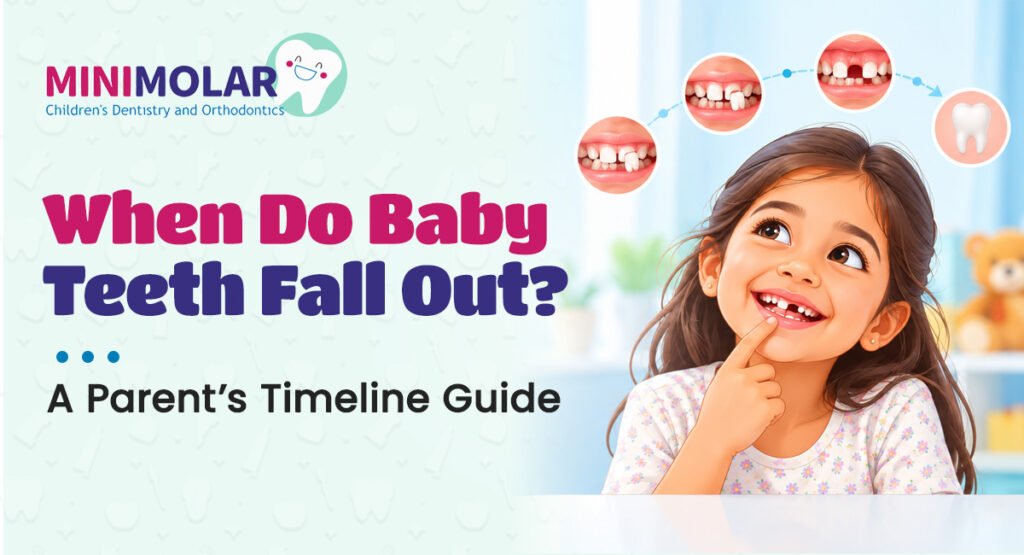
Your child comes to breakfast with a wobbly front tooth. Or other parents are sharing tooth fairy photos while your child’s mouth hasn’t changed at all. Either way, you’re wondering whether the timing is normal.
When do baby teeth fall out? Around age 6 for most children, starting with the lower front teeth. The last baby tooth goes around age 12, and a year either way is still normal. Mini Molar Kids Dental Clinic in Rajarajeshwari Nagar treats children only. The team keeps one dental record for each child, from the first tooth to the last permanent molar. Here’s the age chart, plus what to do at home and when to call.
-
When Do Baby Teeth Fall Out, and in What Order?
Baby teeth fall out between ages 6 and 12, roughly in the order they arrived: front teeth first, back molars last. Baby teeth, also called milk teeth or primary teeth, are the first set of 20. Most children have all 20 by age 3.
The American Dental Association (ADA) eruption chart gives these ages.
| Baby Tooth | Typical Age It Falls Out |
|---|---|
| Central incisors (front teeth) | 6 to 7 years |
| Lateral incisors (beside the front teeth) | 7 to 8 years |
| First molars | 9 to 11 years |
| Canines (pointed teeth) | 9 to 12 years |
| Second molars (last baby teeth) | 10 to 12 years |
Treat the ages as averages. Teeth that came in late often leave late. Family patterns repeat too, so ask a grandparent when they lost their first tooth. A year off the chart isn’t a red flag.
-
What Happens Inside the Gum When a Baby Tooth Loosens?
A permanent tooth grows underneath and slowly dissolves the root of the baby tooth above it. Dentists call this resorption. Once the root has gone, the baby tooth wobbles and drops out.
The adult set has 32 teeth, including four wisdom teeth that arrive between ages 17 and 21. Most children have 28 by about age 13.
Then there are the six-year molars. Four extra permanent molars arrive around age 6 to 7, behind the last baby molars. Nothing falls out to make room for them, so parents often mistake them for baby teeth. They aren’t. They have to last a lifetime, so protection starts early.
-
Why Do the New Teeth Look Bigger and Yellower?
New permanent teeth look bigger and yellower than baby teeth. They are larger, and their enamel is more see-through, so the yellower layer underneath (dentin) shows. Baby teeth look whiter for the opposite reason.
New front teeth can also have small bumps along the biting edge, called mamelons. Chewing wears the bumps smooth. If a tooth looks grey or has white/brown spots, ask the dentist to look.
-
What Are Shark Teeth, and Should You Worry?
Shark teeth are permanent teeth that grow in behind a baby tooth that hasn’t fallen out, so your child briefly has two rows. They’re common, especially behind the lower front teeth.
Encourage your child to wiggle the baby tooth gently. If the baby tooth still hasn’t budged after a few weeks, book a visit. The dentist checks where the new tooth sits and decides whether to remove the baby tooth.
-
Should You Pull a Wiggly Tooth?
No, let the tooth come out on its own. Your child can wiggle it with clean fingers or the tongue. Pulling a tooth that’s still firmly attached can break the root and cause pain and bleeding.
- Wash hands before touching a loose tooth
- Keep brushing gently around the area
- Don’t twist a tooth that still feels firm
Expect a little blood when the tooth drops out. Press clean gauze on the spot for about 10 minutes. Call the clinic if the bleeding hasn’t stopped by then.
-
Why Do Baby Teeth Matter if They Fall Out Anyway?
Baby teeth keep space for the permanent teeth, guide jaw growth, help speech, and let a child chew properly.
A lost tooth leaves a gap, and neighbouring teeth drift into it. The adult tooth can then arrive crooked. Front baby teeth help a toddler form sounds.Therefore, Early loss of such teeth may affect speech causing lisping, further initiate adverse habits like tongue thrusting and aesthetic concerns that may has indirect effect of bullying in school. Back baby molars stay until age 10 to 12, so a cavity in a 4-year-old’s molar can affect the tooth for six to eight years. Left alone, a cavity can spread to the gum or damage the permanent tooth underneath.
A pediatric dentist in RR Nagar can fit a space maintainer, a small appliance that holds the gap open until the adult tooth arrives.
-
What If Baby Teeth Fall Out Too Early or Too Late?
A baby tooth lost well before its time, or one that hangs on long past its age, deserves a dental check.
Early loss usually comes from decay or a knock to the mouth. Neighbouring teeth drift into the space, and the dentist may suggest an appliance to hold the space.
Late shedding is harder to spot. Ask for a check if your child hasn’t lost any baby tooth by around age 8. Ask too if an adult tooth is still missing long after its baby tooth fell out, or if the permanent teeth look crowded. An early orthodontic evaluation around age 7 gives the dentist a chance to review eruption, spacing and bite.
-
How Should You Care for Teeth During the Shedding Years?
Brush twice a day for two minutes with fluoride toothpaste, floss where teeth touch, and see the dentist every six months. During mixed dentition, when baby and permanent teeth sit side by side, plaque collects in extra spots.
Between ages 7 and 12, children brush on their own but still miss spots. Check their teeth afterwards.
- Replace the toothbrush every 3 months, or sooner after an illness
- Skip food and drink except water after the bedtime brush
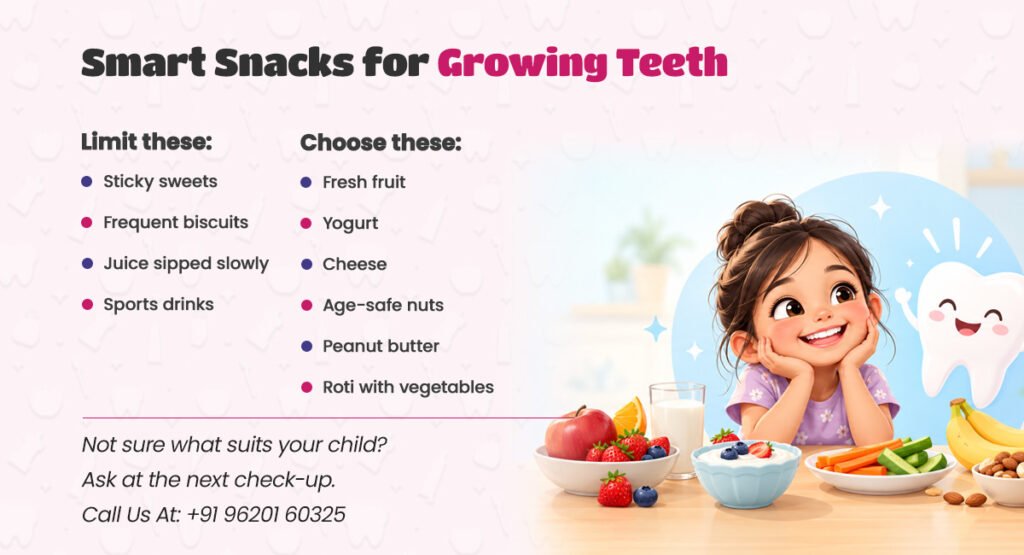
- Keep sweets and juice to mealtimes, and offer water between meals
- Add a mouthguard for contact or stick sports
- Check new molars for deep grooves, stained pits and trapped food
Sealants protect those new molars. A sealant is a thin coating on the chewing surface that blocks decay. Dentists place sealants on first permanent molars at 6 to 7 years and on second molars at 11 to 13 years. Children at higher risk of cavities come every 3 to 4 months.
-
When Should You Call the Dentist During the Shedding Years?
Some signs need a same-day call to the clinic. They point to infection or injury, and waiting makes treatment harder.
- Facial swelling
- Severe toothache
- A broken front tooth
- A tooth that has turned grey after a fall
- Pain that wakes your child at night
Other signs can wait for a routine visit. Book an appointment for white lines near the gum, brown spots, gums that bleed when brushing, or food packing between teeth. Book one too if bad breath won’t clear, or if a shark tooth sits beside a baby tooth that stays firm.
Never reinsert a baby tooth. A knocked-out permanent tooth needs fast action.
- Hold the tooth by the crown
- Rinse the tooth gently
- Store the tooth in milk or saline
- Reach the clinic as quickly as possible
Go to a hospital emergency room for a head injury, nose bleeding,jaw fracture, deep cut, trouble breathing, or bleeding that won’t stop.
Book a Check-Up at Mini Molar Kids Dental Clinic
Most children don’t have any trouble losing their baby teeth. A check-up every six months still helps. The dentist confirms the adult teeth are arriving on schedule and catches decay in the molars that have to last a lifetime.
Mini Molar Kids Dental Clinic treats children only. Orthodontists and a prosthodontist on the team review how teeth erupt and meet as your child grows. Parents can stay in the room. The dentist takes X-rays only when there’s a clinical reason. For swelling, severe toothache, a broken front tooth or night pain, the clinic keeps same-day slots.
Parents searching for the best pediatric dentist in RR Nagar, or a pediatric dentist in Rajarajeshwari Nagar, can book on +91 96201 60325. The clinic is located at No 1132, 1st Floor, Jawaharlal Nehru Road, BEML Layout 3rd Stage. Bring your questions and a note of which teeth have come out and when.
This content is for parent education only. A dentist must examine your child’s teeth, gums, and any X-ray findings before confirming a diagnosis or treatment plan.
Frequently Asked Questions
At what age does a child lose the first baby tooth?
Most children lose the first baby tooth around age 6, usually a lower front tooth. A child who got teeth late often loses them late, so a first loss at 5 or 7 usually doesn’t signal a problem.
What if my child loses a baby tooth before age 5?
Mention the early loss at the next dental visit. A baby tooth lost before age 5 often traces back to decay or an injury. A pediatric dentist in RR Nagar checks whether a space maintainer should hold the gap open for the adult tooth.
What if my child swallows a baby tooth?
Don’t panic. A swallowed baby tooth passes through the body without harm in most cases. Call the clinic if your child has stomach pain or trouble swallowing.
How many baby teeth does a child lose?
A child loses all 20 baby teeth. Eight extra permanent molars arrive behind them with no baby tooth to replace. Most children have 28 permanent teeth by about age 13, and wisdom teeth bring the total to 32.
Does losing a baby tooth hurt?
A loose tooth can feel odd or slightly tender. Sharp pain, swelling or fever isn’t normal. Call the clinic if your child has any of them.
Does my child need a dental visit every time a tooth falls out?
There’s no need for a special visit after a normal loss. Keep the routine check-up every six months. Call sooner for pain or swelling. Also call if an adult tooth appears behind a baby tooth that stays firm for a few weeks.



Recent Comments -
No Comments yet