
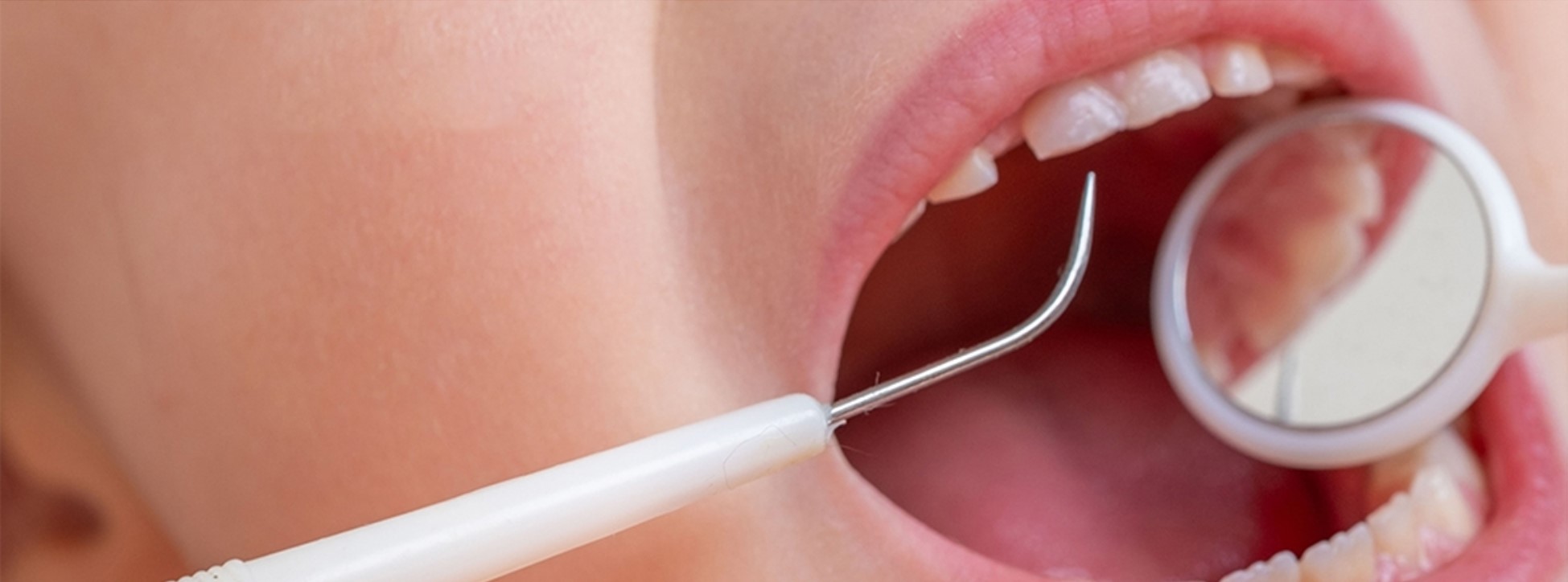
Common Dental Issues in Children and How to Prevent Them!
Did you notice a dark spot on a back tooth, maybe your child pulling away from a cold glass of water, maybe just bad breath that wasn’t there last month. Your first thought is probably “is this normal, or should I worry?”
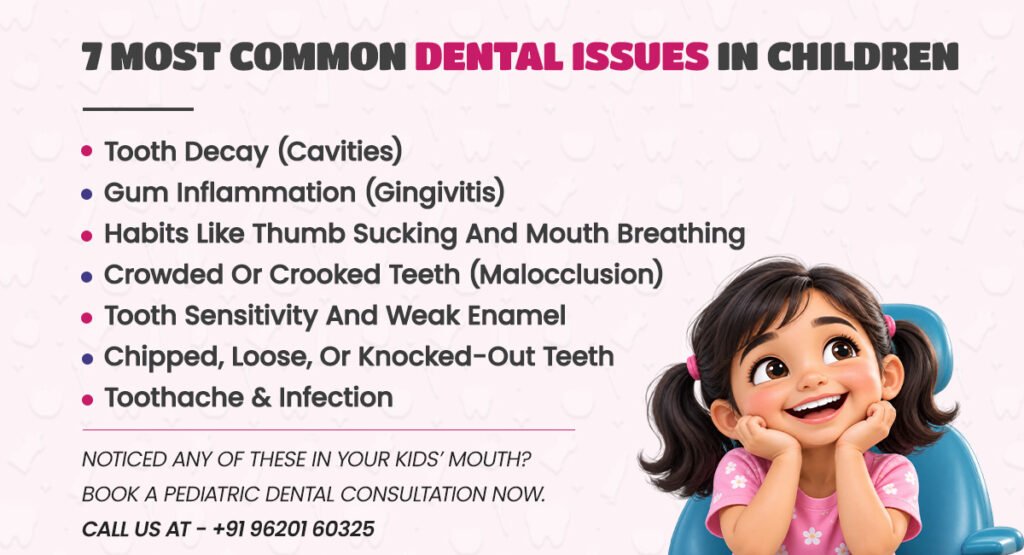
The most common oral health issues in children are tooth decay, gum inflammation, thumb sucking or mouth breathing, crowded teeth, tooth sensitivity, dental injuries, and toothache from infection. Most of these are preventable with daily brushing, the right amount of fluoride toothpaste, a low-sugar diet, and a regular dental check-up.
We hear this question every week at Mini Molar Kids Dental. We treat kids from their first tooth right through their last permanent molar, at our kids dental clinic in Rajarajeshwari Nagar. Therefore, what follows comes from what we actually see week to week, not a generic list copied from somewhere.
Keep reading and you’ll know what each issue looks like, what you can do at home, and when it’s time to call us instead of waiting.
How Does Tooth Decay Start in Kids, and How Do You Stop It?
A cavity happens when bacteria in the mouth turn sugar into acid, and that acid slowly wears a hole into the tooth. It’s the most common oral health issues in children, and it’s also the one you have the most control over.
Here’s what parents usually notice first:
- White or chalky spots near the gumline
- Brown or black stains
- The tooth reacting to cold drinks or sweets
- Your child chewing only on one side
Prevention doesn’t need to be fancy, just consistent.
- Under age 3, use a rice-grain smear of fluoride toothpaste.
- From 3 to 6, move up to pea-sized.
- Brush for two minutes, twice a day, and skip sweets after the bedtime brush.
That last one matters more than most parents realise.
If a cavity does form, don’t panic.
- A small one usually just needs a simple filling.
- A deeper one might need what we call a pulpotomy, which just means removing the infected part from inside the tooth’s crown while keeping the healthy root in place.
It’s routine for us, it doesn’t hurt the way parents fear, and we do it specifically to save the tooth rather than pull it out.
Why Do Kids Get Bleeding or Swollen Gums?
That’s gum inflammation, or gingivitis, and it happens when plaque sits along the gumline too long and irritates the tissue underneath. You’ll usually notice the gums look a bit pink or puffy and bleed slightly when your child brushes.
It’s not an emergency, but don’t ignore either, since it can get worse if you leave it.
What actually works:
- Brush right along the gumline, not just the tooth surface
- Floss once a day once two teeth are touching
- Change the toothbrush every three months, sooner after a cold or flu
If the bleeding hasn’t settled after a week of better brushing, mention it at your child’s next visit and we’ll take a closer look.
Should You Worry About Thumb Sucking or Mouth Breathing?
Not right away. Most kids drop thumb sucking on their own by around age 4, and pacifiers are usually gone by 2 or 3.
It becomes worth watching if the habit sticks around past that age, since it can start pushing the front teeth out of line, which then affects eating and speech.
Mouth breathing is a different signal. If your child sleeps with their mouth open, snores, or seems to breathe through the mouth most of the day, tell us at the next visit. It’s often more about how the jaw and airway are developing than a habit issue on its own.
Why Does My Child’s Tooth Feel Sensitive, or Why Does the Enamel Look Weak?
Sensitivity means a tooth reacts sharply to cold, sweets, or sometimes just air. It usually comes down to the enamel, the hard protective coating on the tooth, wearing thin or forming unevenly in certain spots.
You’ll usually spot this when your child suddenly stops eating ice cream, pulls back from a cold drink, or says one specific tooth “feels funny.” It’s less common than cavities, but it’s easy to overlook, since parents often assume it’s just a phase.
A soft-bristled brush and a desensitising toothpaste help with mild cases. If the sensitivity is sharp, sudden, or stuck to one single tooth, come in and let us take a look rather than waiting it out, since it can sometimes point to deeper enamel damage than what you can see from outside.
Why Do Some Kids End Up With Crowded or Crooked Teeth?
Crowded and crooked teeth, which dentists call malocclusion, happen when there isn’t enough room for teeth to come in straight, or when the upper and lower jaw don’t quite match up.
We use age 7 as a rough checkpoint for a first orthodontic look, sometimes called the “rule of 7.” It’s not a hard cutoff. It’s just a good moment to catch things early, since guiding a growing jaw is a lot easier than correcting it later.
One thing most parents don’t expect: losing a baby tooth too early, from decay or an injury, lets nearby teeth drift into that empty space. That drift is a quiet, common cause of crowding that only shows up years down the line. It also ties into when teeth are supposed to come in.
Most kids lose their front baby teeth around age 6, get their first permanent molars around 6 to 7, and their second molars around 11 to 13. If your child’s teeth are noticeably behind these windows, bring it up at a routine visit rather than guessing on your own.
What Do You Do if Your Child Chips a Tooth or Knocks One Out?
Move fast, but stay calm, since your child will take their cue from you. Rinse the area gently and hold a cold compress against it. If a piece of the tooth is available, keep it in milk, saline, or even your child’s own saliva.
Don’t scrub the tooth clean, and don’t try to put it back in yourself unless it’s a permanent tooth (never a baby tooth). Call us immediately if it’s a permanent tooth, since getting to a dentist fast gives the best shot at saving it.
One more thing to watch for: a tooth that turns grey a few weeks after a fall or a knock. The fall may have affected the nerve inside, even if everything looks fine on the outside. Get it checked rather than waiting to see what happens.
How Do You Know if It’s a Wait-and-Watch Issue, or a Same-Day Visit?
This is really the question behind everything above, so here’s the direct answer. Most changes in your child’s mouth can wait for a routine visit. A smaller list needs a same-day call to us.
Usually fine to wait for a routine visit:
- One white spot with no pain
- Mild bad breath
- Slight gum bleeding that’s improving with better brushing
- A loose baby tooth with no swelling
Call us the same day:
- Swelling near the gums or face
- Pain that wakes your child up at night, which often means the decay has reached the nerve and turned into an infection, which we sometimes call an abscess
- A tooth that’s turned grey after a fall
- A knocked-out or badly chipped tooth
- Bleeding that hasn’t stopped after 10 minutes of gentle pressure
An abscess won’t clear up on its own, no matter how much you brush or rinse. We need to drain the infection and treat what’s causing it, whether that means a filling, a pulpotomy, or, if the infection has gone deeper, a pulpectomy, where we treat the nerve further down into the tooth’s root.
Why Does Prevention Change So Much by Age?
Because what a 2-year-old needs and what a 10-year-old needs aren’t the same thing, and treating them identically means you’ll miss something.
- Ages 0 to 3: Bring your child in by their first birthday, or within six months of that first tooth showing up. Wipe their gums after feeds even before teeth appear, and stop bedtime bottles of anything other than water by 12 to 18 months.
- Ages 3 to 6: You brush, your child “helps.” Start flossing once two teeth touch. Dark lines near the gums or breath that won’t go away is worth a cleaning visit.
- Ages 7 to 12: Check their teeth after they brush, since their technique is still catching up. This is also a good age to ask us about an orthodontic check and, if they play sports, a proper mouthguard.
According to the National Oral Health Survey, dental caries affects 51.9% of 5-year-olds, 53.8% of 12-year-olds, and 63.1% of 15-year-olds in India. That’s a big number, and it’s exactly why catching things early makes such a difference.
Book a Check-Up With Us at Mini Molar Kids Dental
Most common oral health issues in children follow the same pattern. Catch it early, handle what you can at home, and don’t wait once something points to more. You don’t have to figure it all out yourself, that’s what we’re here for.
We see children from their first tooth onward at Mini Molar Kids Dental in Rajarajeshwari Nagar, and a routine check-up is the simplest way to stay ahead of everything on this list. If you’ve been searching for a child dentist near me or a kids dentist near me around RR Nagar, give us a call at +91 96201 60325 and we’ll get you booked in.
Bring your questions along too. We’d rather answer them now than after something small has turned into something bigger.
This content is for parent education only. A dentist needs to examine your child’s teeth, gums, and any X-ray findings before confirming a diagnosis or treatment plan.
Frequently Asked Questions
What is the most common dental problem in children?
Tooth decay. It happens when bacteria turn sugar into acid that wears down the enamel, and regular brushing with the right amount of fluoride toothpaste gives your child the best defence against it.
At what age should my child first see a dentist?
By their first birthday, or within six months of their first tooth, whichever comes first. This early visit mostly helps your child get comfortable in the dental chair before anything needs fixing.
Do cavities in baby teeth need treatment if the tooth is going to fall out anyway?
Yes. If you leave a cavity untreated, it can cause pain, infection, and early tooth loss, and this affects chewing, speech, and the space a permanent tooth will need later. Baby teeth matter more than their short lifespan suggests.
How do I know if my child’s tooth injury needs a same-day visit?
Swelling, a grey tooth, bleeding that won’t stop, or a knocked-out permanent tooth all need same-day attention. A small chip with no pain can usually wait for a scheduled visit.
Why does my child’s tooth hurt at night?
Pain that wakes a child up at night usually means decay has reached the nerve inside the tooth. Don’t just manage this with pain relief, since it almost always means an infection is already there.
Is thumb sucking bad for my child’s teeth?
Not before age 4. Past that age, it can start pushing the front teeth out of line, so mention it at a check-up if it hasn’t stopped by then.
How often should my child visit the dentist?
Every six months for most kids, or every three to four months if they’re at higher risk for cavities. We’ll tell you which schedule fits your child.




Recent Comments -
No Comments yet