
Best Pediatric Dentist in RR Nagar for Cavity Prevention in Kids
Mini Molar Kids Dental is the pediatric dentist in Rajarajeshwari Nagar built specifically around cavity prevention in kids. Treatment does not wait until decay has already appeared. Mini Molar runs a risk-based prevention system: the team assesses each child’s actual cavity risk first, then matches the recall schedule, fluoride plan, and sealant decision to that specific risk level.
Mini Molar treats children from their first tooth through their last permanent molar. The team tracks every child’s dental history as a single continuous record, a model known as a dental home, so each visit builds on the last one.
The sections below, by our expert pediatric dentists at RR Nagar, explain exactly all about Pediatric Dentist in RR Nagar for Cavity Prevention in Kids and why early prevention always works!
In Pediatric Dentistry, Why Does a Risk-Based Approach Matter More Than a Standard Cleaning?
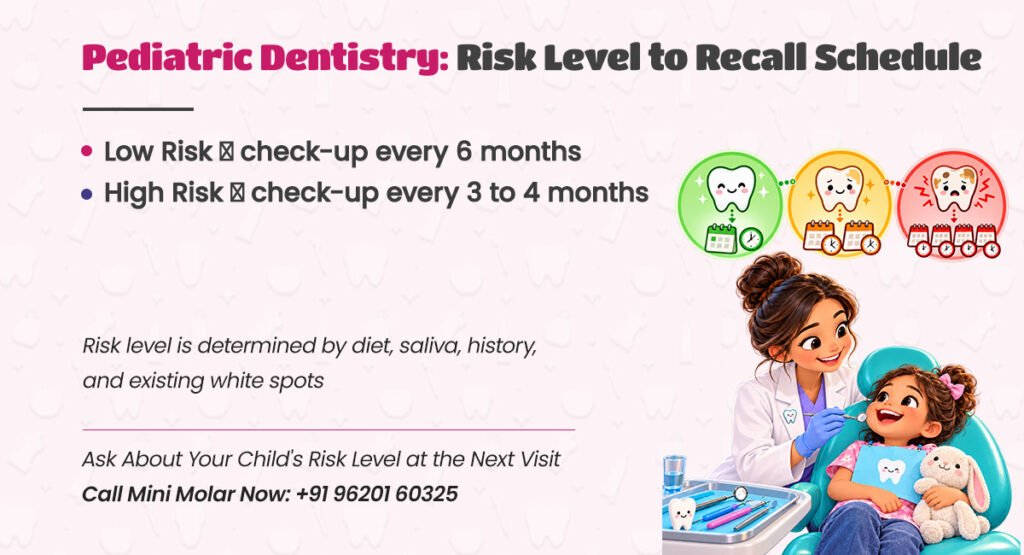
A standard cleaning treats every child the same way, regardless of how likely that specific child is to develop a cavity. Mini Molar’s risk-based approach identifies each child’s actual risk level first, then builds the treatment plan around that result.
Two children with similar-looking teeth can carry very different cavity risk. Diet, saliva quality, past dental history, and whether early white-spot lesions have already appeared all shape that risk. A six-month cleaning cycle suits a low-risk child well. A high-risk child on that same schedule can develop a cavity between visits, one a shorter recall interval would catch in time.
What Experience and Focus Does Mini Molar Bring to Children’s Dentistry?
Mini Molar focuses on one area: children’s teeth. The team includes pediatric dental specialists, orthodontists, and a prosthodontist, all within the same pediatric-only practice. A family gets cavity care, orthodontic care, and emergency care under one roof.
Two things form the foundation of this approach:
- A Dental Home Model. The pediatric dentists team tracks a child’s dental history as one ongoing record across years. This continuity lets the team spot risk changes as a child grows.
- A Pediatric-Focused Team. Every dentist at Mini Molar works exclusively with children, from infants attending their first check-up to teenagers completing orthodontic treatment.
What Does a Caries Risk Assessment Actually Involve?
A caries risk assessment is a structured review of the specific factors known to increase a child’s chance of developing a cavity. The team carries this out before making any treatment decision. The result places a child into a risk category, and that category determines the recall interval and preventive treatment that follows.
The assessment considers several factors together:
- Diet, including how frequently a child consumes sugary or starchy snacks
- Saliva quality, since saliva naturally helps protect teeth from acid
- Existing white-spot lesions, which represent early and reversible decay
- Dental history, including any previous fillings or cavities
What Happens During a Cavity Prevention Visit at Mini Molar, Step by Step?
A cavity prevention visit at Mini Molar follows a consistent sequence. Each step builds on the one before it, starting with history and ending with a clear plan for what comes next.
- History and diet review. The dentist discusses health background, current diet, and the child’s existing brushing routine first.
- Risk assessment and eruption tracking. The dentist assesses cavity risk factors and checks which teeth are erupting and how the bite is developing.
- Gum check and professional cleaning. The hygienist removes plaque and tartar through professional cleaning, known as prophylaxis, and reviews gum health.
- Fluoride and sealants where needed. The dentist applies these based on the child’s identified risk level.
- Home care coaching. The team gives specific guidance on brushing technique, diet adjustments, and habits such as thumb sucking.
- A written recall plan. Parents leave with a clear next appointment date based on the child’s actual risk level.
The pediatric dentist in RR Nagar takes photographs and X-rays only when a genuine clinical reason exists.
When Are Sealants and Fluoride Varnish Recommended, and at What Age?
Mini Molar typically places sealants on first permanent molars around age 6 to 7, and on second permanent molars around age 11 to 13. These teeth carry deep grooves that trap bacteria and food debris most easily. A sealant works as a physical barrier, closing off those grooves before decay can start inside them.
Fluoride varnish supports remineralisation, the process of rebuilding mineral content a tooth has already begun to lose. An early white-spot lesion represents exactly this kind of mineral loss. Catching that spot early is the central aim of this risk-based approach. A visible hole always needs a filling.
How Does Mini Molar Keep Prevention Visits Comfortable for Anxious or Sensitive Children?
Mini Molar uses behaviour guidance and, where appropriate, nitrous oxide sedation to keep every visit calm. A risk assessment and cleaning only produce accurate results when a child stays settled enough to cooperate through each step.
Mini Molar’s comfort approach includes:
- The dentist explaining each step in simple words before using any instrument
- Distraction techniques during the visit itself
- Nitrous oxide sedation for children who are especially anxious or sensory-sensitive
- Parents present in the room throughout the visit
- Strict infection control at every stage
What Can Parents Do at Home Between Prevention Visits?
Daily habits at home carry much of the responsibility for cavity prevention between appointments.
- A rice-grain smear of fluoride toothpaste up to age 3, pea-size from age 3 to 6, and a normal amount from age 6 onward
- No food or drink after the bedtime brush
- Water between meals, with sweets limited to mealtimes
- No sleeping with milk or a sweetened bottle
- A toothbrush replaced every 3 months, or sooner after an illness
These home habits directly shape which risk category a child falls into at the following visit.
Book a Cavity Prevention Visit at Mini Molar Kids Dental
Mini Molar Kids Dental in Rajarajeshwari Nagar runs cavity prevention as a structured, risk-based process. Each child gets a plan that matches their actual risk. A pediatric-only team or the best pediatric dentist in RR Nagar, a continuous dental history for every child, and comfort measures including behaviour guidance and nitrous oxide where appropriate all support this process.
Anyone searching for a pediatric dentist in RR Nagar or kids cavity treatment in RR Nagar can call +91 96201 60325 to book a cavity-risk assessment, with same-day availability for anything urgent. Parents can raise all their queries and questions at the time of booking.
This content is for parent education only. A dentist must examine a child directly before confirming any diagnosis, risk level, or treatment plan.
Frequently Asked Questions
How is a prevention visit at Mini Molar different from a regular cleaning?
A caries risk assessment comes first, and this result decides the recall schedule and treatment plan for that specific child.
How often will a child need to return for prevention visits?
Every 6 months for a low-risk child, or every 3 to 4 months for a high-risk child. The child’s actual risk level sets this schedule.
Do all children need sealants at Mini Molar, or only some?
The team recommends sealants based on individual risk and tooth anatomy. Children with deeper grooves in their molars or higher cavity risk benefit the most from this treatment.
Is nitrous oxide used during routine prevention visits at Mini Molar?
Yes. For children who are especially anxious or sensory-sensitive, nitrous oxide sedation helps keep the visit calm enough for an accurate assessment and cleaning.
At what age should cavity-risk assessments begin?
As early as the first dental visit, ideally by a child’s first birthday or within six months of the first tooth appearing.
Can early decay be reversed without a filling?
Yes. A white-spot lesion, decay in its earliest and most reversible stage, can often remineralise with fluoride varnish and improved home habits. A visible hole always needs a filling.



Recent Comments -
No Comments yet