Do Cavities in Baby Teeth Really Matter If They’re Going to Fall Out Anyway?
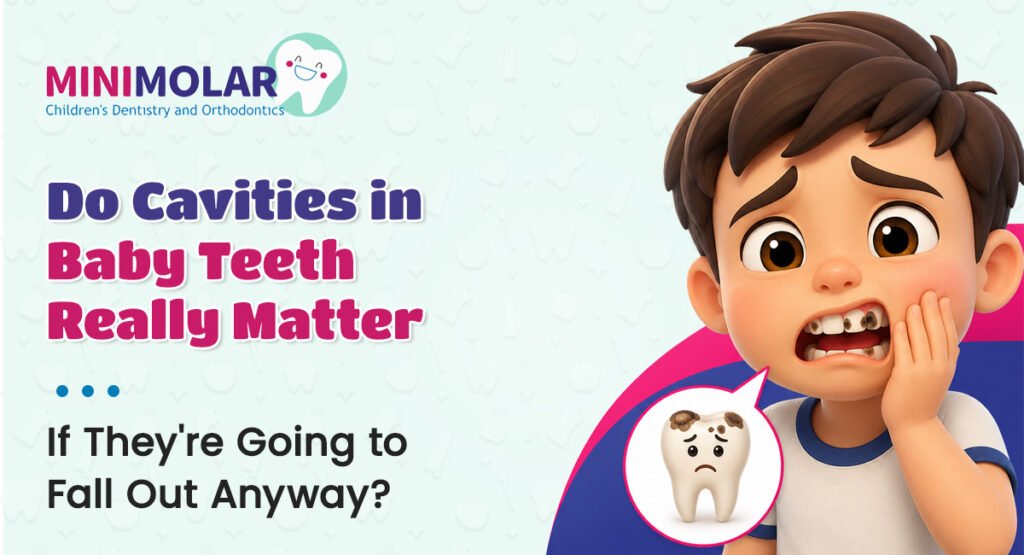
Yes, they matter, more than most parents assume. A cavity in a baby tooth doesn’t just disappear when the tooth eventually falls out. It can cause pain, infection, and problems for the permanent tooth waiting underneath, all while that baby tooth is still sitting in your child’s mouth for years.
At Mini Molar, Dr. Pavan TP team sees this exact question from parents constantly, usually right after a cavity’s just been spotted. And to answer that here is why do cavities matter in baby teeth?, and what waiting can actually cost you.
Why Do Cavities Matter In Baby Teeth?
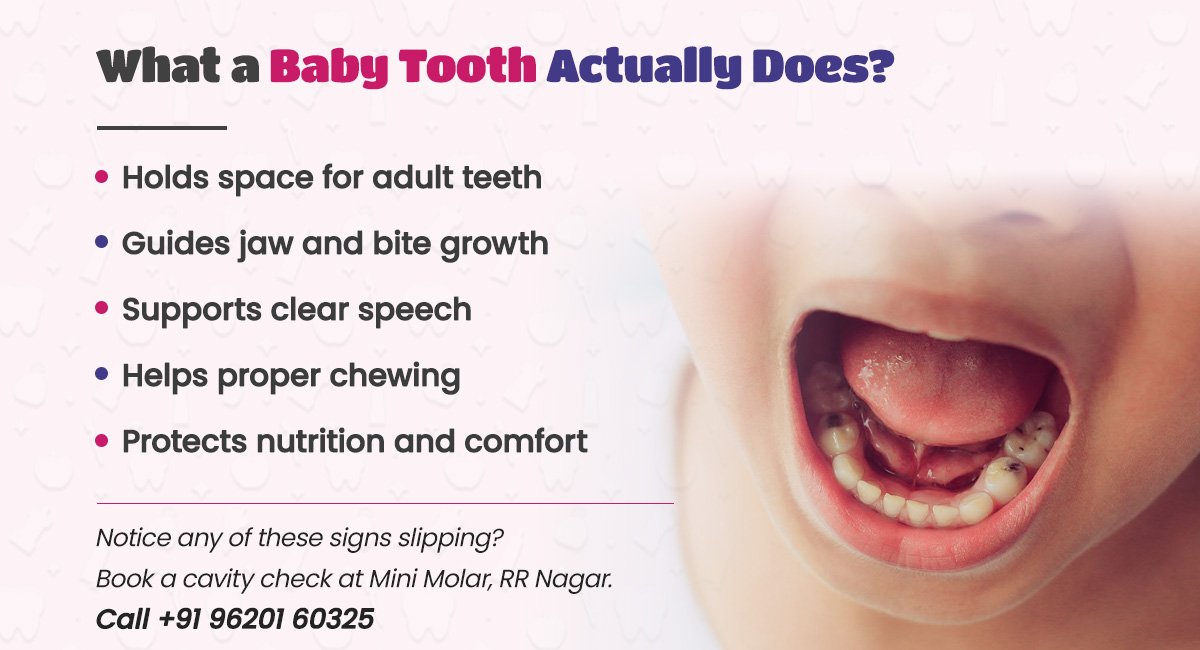
Baby teeth aren’t just placeholders sitting around doing nothing until they fall out. They hold space for the permanent tooth growing underneath, and if a baby tooth is lost early because of decay, the teeth next to it can drift into that gap. The permanent tooth that was supposed to come up straight now has nowhere to go, or comes in crooked.
They’re also doing quieter jobs most parents don’t think about.
- Baby teeth guide how the jaw develops and how the bite lines up, which affects how straight or crowded permanent teeth eventually come in.
- They help kids form certain sounds clearly while learning to talk, missing or damaged front teeth in particular can affect speech at exactly the age a child is learning to talk properly.
- And they let a child chew properly, which matters for actual nutrition.
What Happens If A Baby Tooth Cavity Is Left Untreated?
The baby tooth cavity doesn’t just sit there quietly. A cavity left alone tends to grow. Eventually it reaches the nerve, and that’s when the real pain starts, the kind that makes a child stop eating certain foods or wake up at night.
A few signs are worth watching for before it gets that far.
- A dark spot or visible hole on a tooth. Sensitivity to hot, cold, or sweet food.
- A child avoiding chewing on one side of their mouth.
Any of these is worth a dentist’s look, even if your child hasn’t complained of pain yet.
Left long enough, it can turn into an infection. That infection doesn’t always stay contained to one tooth either, it can spread to the gums or, worse, affect the permanent tooth still developing right underneath.
And losing the baby tooth early because of this shifts the whole timeline your child’s mouth is supposed to follow.
Aren’t Baby Teeth Going To Fall Out Soon Anyway?
Some of them, yes, fairly soon. But not the ones that matter most here.
The back molars, the teeth that get cavities most often, usually aren’t lost until somewhere between age ten and twelve. So a cavity that shows up in a four year old’s molar isn’t a problem for a few months, it’s potentially a problem for six to eight years.
Does Every Cavity In A Baby Tooth Need To Be Filled?
Not always, honestly. A very small cavity caught early sometimes gets managed with better brushing and diet changes instead of a filling right away. And if a tooth is genuinely close to falling out on its own, with no pain and no sign of infection, a dentist might reasonably decide to just let it be.
But those are the exceptions, not the rule. Most cavities, especially ones that are already causing sensitivity or visible damage, do need a kids cavity treatment in RR Nagar.
A dentist usually checks this with a simple visual exam, sometimes an X-ray if the cavity’s between teeth where it’s harder to see.
Good habits at home lower the odds of getting to this point at all.
- Brushing twice a day with a fluoride toothpaste
- Cutting back on sugary snacks between meals
- Keeping up with six-month check-ups catch most problems while they’re still small and easy to manage.
How Are Baby Teeth Cavities Treated At Mini Molar?
Treatment for kids cavities in RR Nagar depends entirely on how far the cavity has progressed. A small one might just need a filling, quick, done in one visit. A deeper cavity that’s reached closer to the nerve sometimes needs a bit more, like a pulpotomy, before it’s sealed up.
- Either way, the team keeps the child in the loop the whole time, showing the tools, explaining what each one does in simple words, before anything actually touches a tooth.
- The filling itself is done under local anaesthesia, so the child feels pressure at most, not pain.
For milk teeth cavity treatment in RR Nagar, the priority is always keeping the visit calm, since a child’s first experience with a filling shapes how they feel about every dental visit after it. A rushed, tense first filling can make a child dread the dentist for years. A calm one at Mini Molar usually does the opposite.
One Small Visit to Mini Molar Now Beats a Bigger One Later.
If your child’s shown any sign of a cavity, sensitivity, a visible spot, or complaints about a tooth, don’t wait to see if it resolves on its own. Call +91 96201 60325 to book a check-up at Mini Molar, Rajarajeshwari Nagar.
Baby teeth falling out eventually doesn’t mean cavities in them don’t matter right now. A cavity ignored today can mean pain, infection, or a crooked permanent tooth years down the line, all because a small problem was left alone for too long. Getting it checked is the only way to know what it actually needs.
Frequently Asked Questions
Why do cavities matter in baby teeth if they fall out anyway?
Because the tooth stays in place for years first. A cavity can cause pain and infection long before that tooth is due to fall out.
What happens if I just leave my child’s cavity untreated?
It usually gets worse, not better. Pain, infection, and damage to the permanent tooth underneath are all real risks.
When do baby teeth actually fall out?
Front teeth go first, around age six. Back molars, which get cavities most, often stay until age ten or twelve.
Does every baby tooth cavity need a filling?
No. Very small ones sometimes don’t. Most do, though, and a dentist is the only one who can tell which is which.



Recent Comments -
No Comments yet