Tooth-Friendly Snacks That Help Keep Your Child’s Teeth Healthy
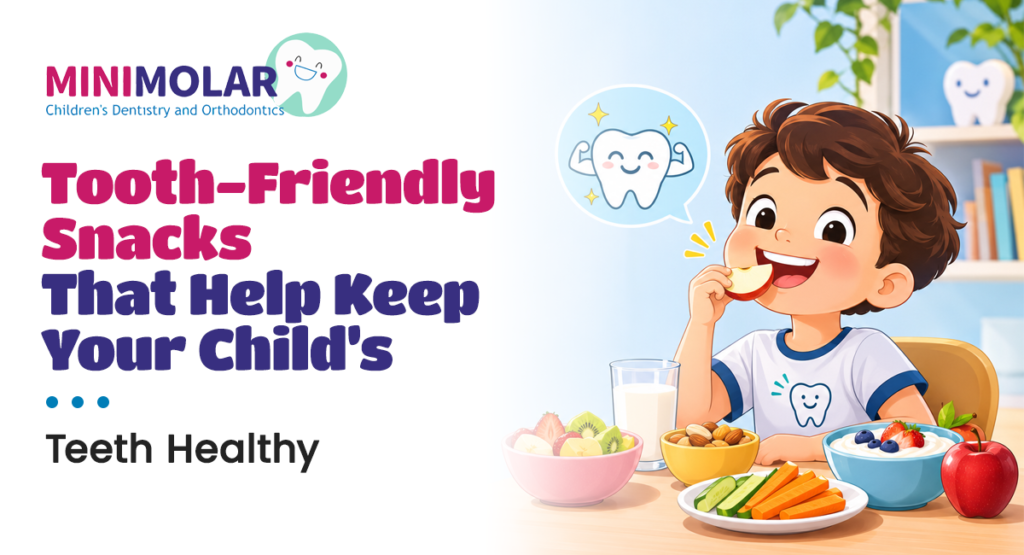
It’s 4 pm, your child is hungry, and dinner is hours away. Most parents reach for whatever’s closest, and our dentists understand why. But that snack decides how hard your child’s teeth work against sugar for the next half hour.
Smart snacks for healthy teeth are low in added sugar, easy to rinse off, and served at set times. Fresh fruit, plain yogurt, cheese, and roti with vegetables all fit. Sticky sweets, biscuits, and slowly sipped juice don’t. At Mini Molar Kids Dental Clinic in Rajarajeshwari Nagar, our dentists ask about snacks at every cavity check, because what your child eats and how often matters as much as brushing. Here’s what we tell parents in the chair.
How Does Snacking Affect a Child’s Teeth?
Every snack feeds the bacteria in plaque, and those bacteria turn sugar into acid that attacks enamel for about 20 minutes. Plaque is the sticky film of bacteria on teeth. Enamel is the hard outer layer that protects each tooth.
Early on, the acid pulls minerals out of the enamel. We call this demineralisation. Saliva, fluoride, and a gap between snacks let the enamel remineralise, which means the minerals return.
Each new snack restarts that 20-minute clock. If your child grazes from 4 pm until bedtime, the teeth stay under attack for hours, even on small portions. The American Dental Association says limiting snacking helps prevent tooth decay. Children’s enamel is thinner than yours, so decay moves faster once it starts.
What Are the Best Smart Snacks for Healthy Teeth?
Cheese, plain yogurt, fresh fruit, crunchy vegetables, roti with vegetables, age-safe nuts, unsweetened peanut butter, and water suit teeth best. They carry little added sugar, and most of them make your child chew, which keeps saliva flowing.
Plain is the key word. Flavoured yogurt cups and sweetened spreads put the sugar back in. Whole fruit beats juice, because juice packs concentrated sugar into a drink your child can sip for an hour.
Take care with nuts. Whole nuts can choke young children, and a nut allergy needs medical advice. Ask your dentist or paediatrician which nuts suit your child’s age.
Which Snacks Raise the Risk of Cavities in Kids?
Sticky sweets, biscuits, chips eaten often, packaged juice sipped slowly, and sports drinks raise cavity risk the most. All four keep sugar on the teeth for long stretches.
Snacks with different consistency have different caries risk. Sticky foods cause the most trouble. Toffee, chikki, and dried fruit such as raisins cling to the grooves of the back teeth, and a toothbrush can’t always reach them. Jaggery and honey don’t solve the problem either. Teeth react to both much as they do to white sugar.
We don’t ask parents to ban treats. Children push back when every treat disappears, so a swap works better. Offer a cheese cube where you’d usually offer a biscuit, or a whole apple where you’d pour juice.
When Should Children Have Their Snacks?
Give snacks at planned times and keep sweet treats for mealtimes, because every snack restarts a 20-minute acid attack. Three meals and two planned snacks give teeth long gaps to recover. Constant nibbling gives them no break, and that’s where most cavities start.
These habits protect teeth day to day:
- Set snack times, and skip grazing in between
- Offer water between meals
- Serve sweets with a meal, then offer water
- Give nothing to eat or drink after the bedtime brush
- Never let your child sleep with milk or a sweet drink in a bottle or sipper
- Rinse the mouth with water after sports drinks or packaged juice
Early childhood caries is tooth decay in babies and toddlers, often linked to night feeds and sweet drinks. If your toddler still feeds at night, cut those feeds down by 12 to 18 months to protect the front teeth.
What Does a Tooth-Friendly School Tiffin Look Like?
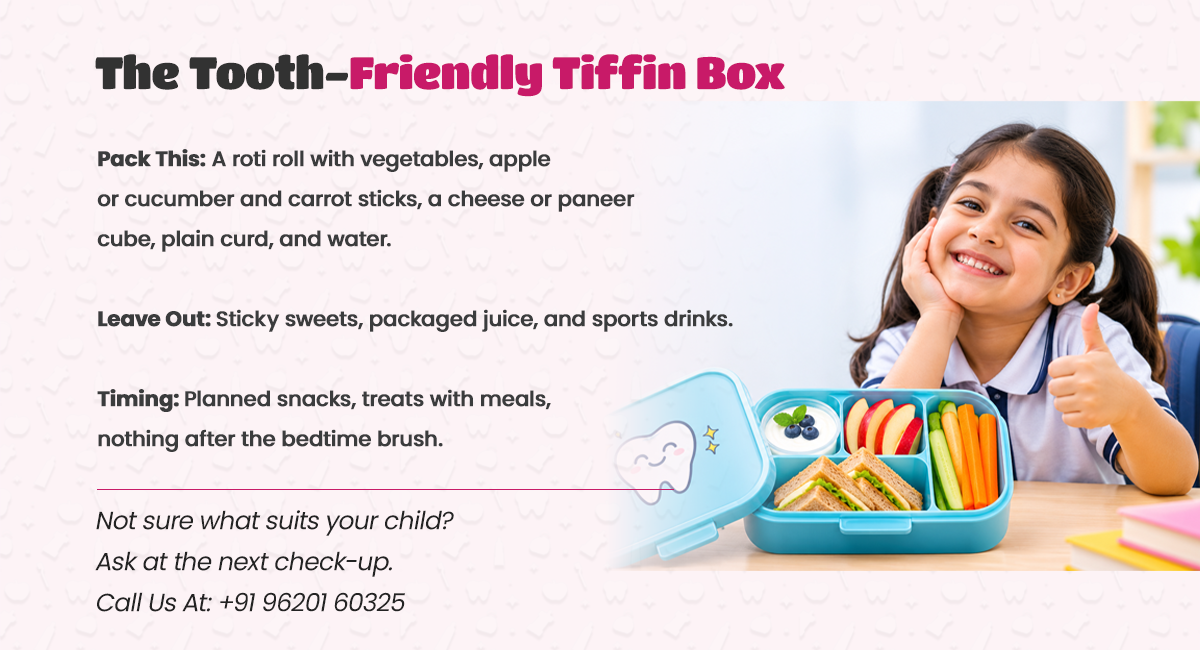
A tooth-friendly tiffin has one filling item, one crunchy fruit or vegetable, a little dairy, and a bottle of water. You’ll pack it in five minutes.
A few ideas that travel well:
- A roti roll with vegetables
- Apple slices, or cucumber and carrot sticks
- Paneer cubes or a cheese cube
- Plain curd in a small container
- A water bottle
Leave out sticky sweets and packaged juice. If your child gets a treat, pack it with the lunch so it arrives alongside a meal.
Do Healthy Snacks Replace Brushing and Dental Check-Ups?
No. Good snacks help, but your child still needs to brush twice a day with fluoride toothpaste and see a dentist regularly. Use a rice-grain smear of toothpaste up to age 3, and a pea-sized amount from age 3 to 6.
At check-ups, our dentists do a caries risk assessment. That’s a review of your child’s diet, saliva, white spots, and dental history, and the result sets how often your child needs to come in. We often add fluoride varnish, a strengthening coating painted on the teeth, and sealants, thin coatings that block decay in the deep grooves of molars.
Sealants go on first permanent molars at 6 to 7 years and on second molars at 11 to 13 years. Children at higher risk usually visit every 3 to 4 months.
What Early Signs Show Snacks Are Affecting Your Child’s Teeth?
Snacks can mark teeth long before your child says it hurts. Watch for these:
- White or chalky spots near the gumline
- Brown stains in the grooves of back teeth
- Sensitivity to cold drinks or sweets
- Bad breath or a sour taste
- Chewing only on one side
- Food getting stuck between teeth
If you search for a child dentist near me after spotting these signs, book a check-up with our dentists at Mini Molar Kids Dental Clinic. If pain wakes your child at night, or the face swells, don’t wait. Call our clinic the same day.
Book a Check-Up at Mini Molar Kids Dental Clinic
Snack timing, snack choice, and daily brushing work together. Plan the snacks, pack water, and keep sweets for mealtimes. Then let a dentist check how it’s working, since your child’s risk isn’t the same as a friend’s.
Mini Molar Kids Dental Clinic treats children only. Each visit starts with a clear explanation, and you can stay in the room if you’d like. Our team offers diet and sugar counselling, fluoride varnish, and sealants, and we keep same-day slots for severe toothache, swelling, or night pain.
If you’re looking for a kids dentist near me, or a pediatric dentist near me in the RR Nagar area, call +91 96201 60325 to book. You’ll find us at No 1132, 1st Floor, Jawaharlal Nehru Road, BEML Layout 3rd Stage, RR Nagar, Bengaluru 560098. Bring a list of what your child usually snacks on, and our dentists will suggest changes you can keep up.
This content is for parent education only. Every child’s risk differs, so a dentist must examine your child’s teeth, gums, and dental history before confirming any diagnosis or treatment. If your child has a medical condition, allergy, or feeding difficulty, don’t change the diet without asking your doctor first.
Frequently Asked Questions
Is fruit bad for my child’s teeth?
No. Whole fruit brings fibre and makes your child chew, which keeps saliva flowing. Juice and dried fruit cause trouble, because juice goes down slowly in sips and dried fruit sticks to the back teeth.
Are jaggery and honey better than sugar for teeth?
No. Jaggery, honey, and brown sugar feed the same bacteria as white sugar, and teeth react to all of them in much the same way. Treat them as sweets, and serve them with meals so your child doesn’t nibble them all day.
How many snacks a day are fine for a child?
Fewer, planned snacks beat constant nibbling. Each snack restarts a 20-minute acid attack. Your child’s cavity risk level sets the right pattern, so ask your dentist at the next check-up.
Is cheese good for children’s teeth?
Yes. Plain cheese has little sugar and provides calcium, and chewing it keeps saliva flowing. Check for dairy allergy first, and pick plain cheese. Processed spreads aren’t the same thing.
Can my child still have sweets or chocolates?
Yes, in small amounts with a meal. But let that not be a habit on a daily basis. Try to reduce it to once a week or 2 . Offer water afterwards and keep up brushing twice a day. Sweets that linger, or get nibbled all afternoon, do more damage than one treat at lunch.
Are nuts and peanut butter safe for kids?
Take care with whole nuts. They can choke young children, so ask your dentist or paediatrician which form suits your child’s age. Peanut butter spread thinly is a common option, but check for allergies first.



Recent Comments -
No Comments yet