
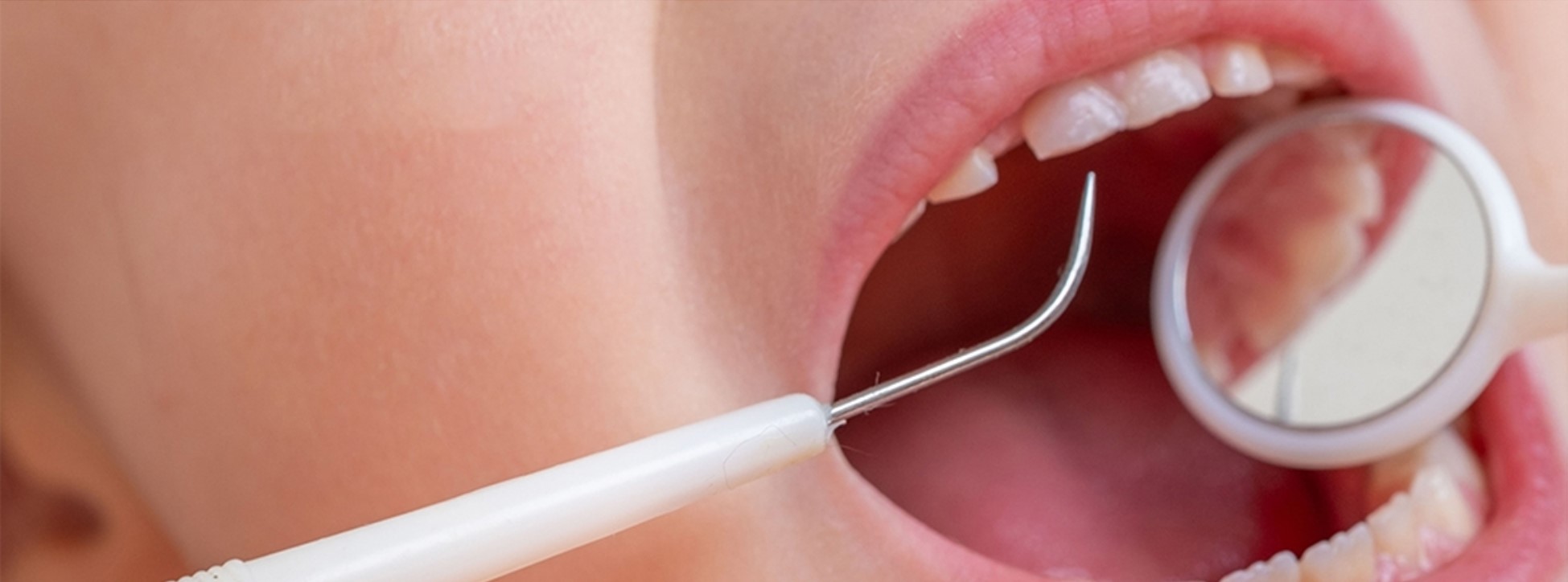
Painless Dental Treatment for Kids in RR Nagar: How We Keep Kids Comfortable?
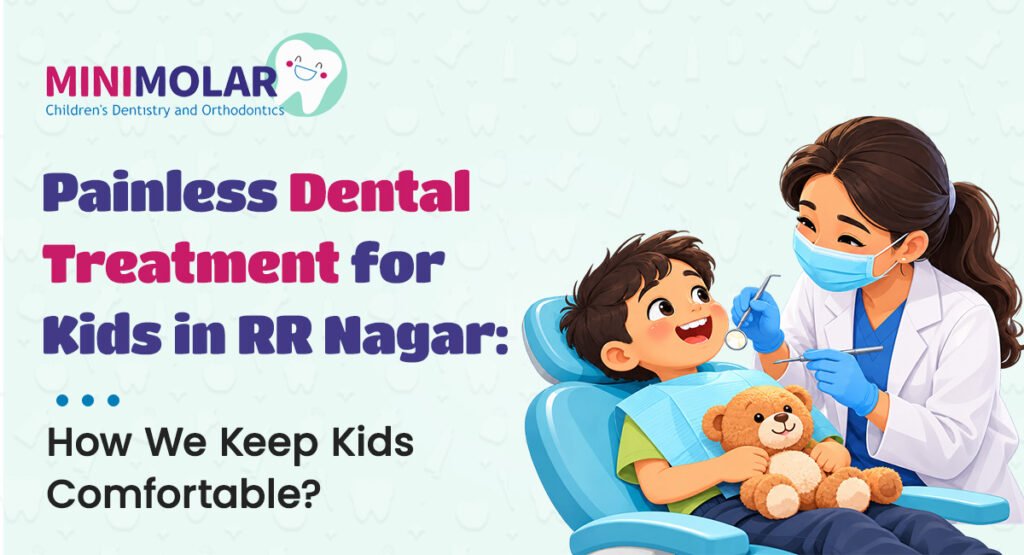
You’re not booking this pediatric dental appointment lightly. Maybe your child had a bad experience before, maybe they’re just scared of anything that sounds like “dentist,” and you’re wondering if this visit is going to be a fight.
Painless dental treatment for kids in RR Nagar, at Mini Molar Kids Dental, means a specific set of steps we follow before, during, and after every procedure:
- Numbing gel before an injection, when numbing is needed,
- Child-friendly explanations before we touch a single tool,
- The option to pause or reschedule if a child truly can’t cope that day.
We’re a pediatric-only dental clinic in Rajarajeshwari Nagar, and the same dentist sees your child at every visit, so nothing here is a one-time script. Read on and you’ll know exactly what happens in the chair at our kids dental clinic in RR Nagar, step by step.
What Does “Painless Dental Treatment” Actually Mean for Kids?
It means our pediatric dentists work to keep pain and fear as low as possible at every stage, not that every child feels absolutely nothing. No honest dentist can promise zero sensation for every procedure and every child.
What we can promise is a process built to reduce pain sharply and manage any discomfort that remains.. That includes topical numbing before injections, slow and careful technique, and stopping the moment a child is in real distress instead of pushing through.
What Comfort Techniques Do We Use Before Any Dental Treatment Starts?
We use behaviour guidance, which just means specific ways of talking to and preparing a child so they know what’s coming and feel some control over it. This starts before we touch anything.
The core technique is called Tell-Show-Do. We tell your child what we’re about to do in simple words, show them the tool or step on a finger or a model first, then do it. No surprises, no sudden movements.
Alongside that, we use:
- Distraction. Stories, games, or music during the actual procedure, so attention isn’t fixed on what’s happening in the mouth.
- Short appointments with breaks. We don’t push through a long procedure in one stretch if a child needs a pause.
- Parent in the room. You stay close, especially for younger children.
- Lap exams for babies and toddlers. Your child sits facing you, close to you, for the exam.
Every one of these exists for one reason: a calm child cooperates better, and a child who cooperates gets treated faster and with less discomfort.
How Do We Manage Numbing and Anaesthesia for Kids?
We apply a numbing gel to the gum before an injection, so your child feels pressure rather than the needle itself. This one step removes most of the fear kids associate with “the dentist.”
Local anaesthesia is used when indicated, meaning only when the specific procedure needs it, and only after we’ve checked your child’s medical history ,relevant allergies, and taken your consent. We don’t inject as a default step. Many cleanings, sealants, and fluoride treatments need no anaesthesia at all.
If your child does need an injection, expect this order: topical gel first, time for it to take effect, then a slow, careful injection. Numbness typically sets in within a few minutes.The timing and degree of numbness can vary depending on the anaesthetic and the procedure.
What If My Child Is Highly Anxious or Has Sensory Sensitivities?
We slow down further, and we stop if we need to. This isn’t a fallback plan, it’s built into how we treat every anxious child from the first minute.
Our pediatric dentists are trained in special needs dentistry, which covers children with sensory sensitivities, autism, or any condition that makes a standard visit harder to manage. As our team puts it, a lot of kids just need someone to slow down and explain what’s happening before touching anything.
If a child is too distressed to continue safely, we simplify the remaining steps or reschedule the visit entirely. We won’t restrain a child through a procedure just to finish it in one sitting. A second, calmer visit may produce a better result than pushing through the first one.
What Actually Happens During a Kid’s Dental Visit?
A visit follows five steps, in this order, every time:
- History and Exam. We ask about your child’s health and look at their teeth. Photos or X-rays are taken only if there’s a clinical reason for them.
- Diagnosis & a Written Plan. This covers cavity risk, how teeth are erupting, and whether an orthodontic screening makes sense.
- Professional Cleaning.
- Treatment, matched to what’s actually needed: a tooth-coloured filling, a pulpotomy (removing infected tissue from inside a baby tooth’s crown while keeping the healthy root), a pulpectomy (the same idea, done deeper into the root), a crown, or, if a tooth can’t be saved, an extraction with a space maintainer to hold room for the permanent tooth.
- Home Guidance and a Follow-Up Schedule, based on your child’s specific risk level.
Before any of steps 3 to 5 begin, we explain the diagnosis, the options, and the comfort measures to you directly. You know what’s happening and why before we start.
Where possible, we go conservative first.
- An early white spot on a tooth often just needs fluoride gel or varnish to remineralise it, which means rebuilding the mineral content the tooth already lost, no drilling required.
- We also use SDF (silver diamine fluoride) with your consent for some early cavities. It stops decay without a drill, though the treated spot does turn dark afterward. That colour change means it’s working, not that something’s wrong.
What Should You Expect After Treatment?
Expect some numbness for one to three hours, and mild tenderness, both of which are normal and not a sign anything went wrong. Watch your child during this window so they don’t accidentally bite their lip, cheek, or tongue while it’s still numb.
Give soft, cool food until feeling fully returns. Pain relief, if needed, should only be given at the dose suited to your child’s age and weight, so check with us or a pharmacist rather than guessing. From the next day, a warm salt water rinse (half a teaspoon of salt in a cup of water) helps healing along.
Call us if any of these happen:
- Pain gets worse after 48 hours instead of easing
- Swelling appears
- Your child develops a fever
- There’s a bad taste that doesn’t go away
- Sensitivity lasts beyond a week
How Can You Prepare Your Child at Home Before the Visit?
Use plain, positive words and skip anything scary. Say “the dentist will count your teeth,” not “the dentist will check for cavities” or, worse, “it won’t hurt.” Kids pick up on the words you’re avoiding just as much as the ones you use.
A few things that genuinely help:
- Book a morning slot, when your child is less tired and more cooperative
- Read a story about visiting the dentist beforehand
- Bring a favourite soft toy
- Practise “open wide” as a game at home
- Keep pre-visit snacks light, and brush before you leave
At the visit itself, stay calm yourself, and tell us your main concern first. Kids read a parent’s tension faster than anything we say.
Book a Comfortable & Painless Dental Visit for Your Child in RR Nagar
Painless dental treatment for kids in RR Nagar isn’t a slogan at Mini Molar Kids Dental, it’s Tell-Show-Do, numbing gel before injections, a written plan you see before treatment starts, and the willingness to pause or reschedule rather than force a procedure through. We’re a pediatric-only practice with MDS-qualified specialists, and your child sees the same dentist at every visit, so trust builds instead of resetting each time.
If you’ve been searching for a kids dentist near me or a kids dental clinic in RR Nagar, call us at +91 96201 60325 to book a consultation. We also keep same-day emergency slots open for swelling, severe toothache, a broken front tooth, or pain that wakes a child at night. Come in, tell us what worries you most, and we’ll walk you through exactly what to expect before anything begins.
This content is for parent education only. A dentist needs to examine your child directly before confirming any diagnosis or treatment plan.
Frequently Asked Questions
Is dental treatment for kids really painless?
It’s designed to keep pain and fear as low as possible, using numbing gel, careful technique, and behaviour guidance, but no honest dentist can promise zero sensation for every child and every procedure.
What is Tell-Show-Do in pediatric dentistry?
It’s a technique where the dentist tells the child what’s about to happen, shows the step or tool first, usually on a finger, then does it. It removes the surprise that causes most dental fear in kids.
Does Mini Molar treat children with dental anxiety or special needs?
Yes. The team is trained in special needs dentistry and uses slower explanations, extra pauses, and rescheduling when a child is too distressed to continue safely.
What happens if my child cries or refuses treatment?
We slow down, simplify the remaining steps, or reschedule the visit entirely rather than force it through. A calmer second visit gets a better result than pushing through a difficult first one.
Is local anaesthesia safe for young children?
Yes, when it’s given after checking medical history and allergies and taking consent, which is our standard process. It’s used only when a specific procedure needs it, not as a default step.
How long does numbness last after treatment?
Usually one to three hours in the lips, cheeks, and tongue. Watch your child during this time so they don’t bite the numb area by accident.
What if my child needs emergency dental care?
Call us right away for swelling, a broken front tooth, severe toothache, or pain that wakes a child at night. Same-day emergency slots are kept open for exactly these situations.


Recent Comments -
No Comments yet